

From Alytus to Zarasai: More than 1,500 entities across Lithuania now have access to ultra-fast internet
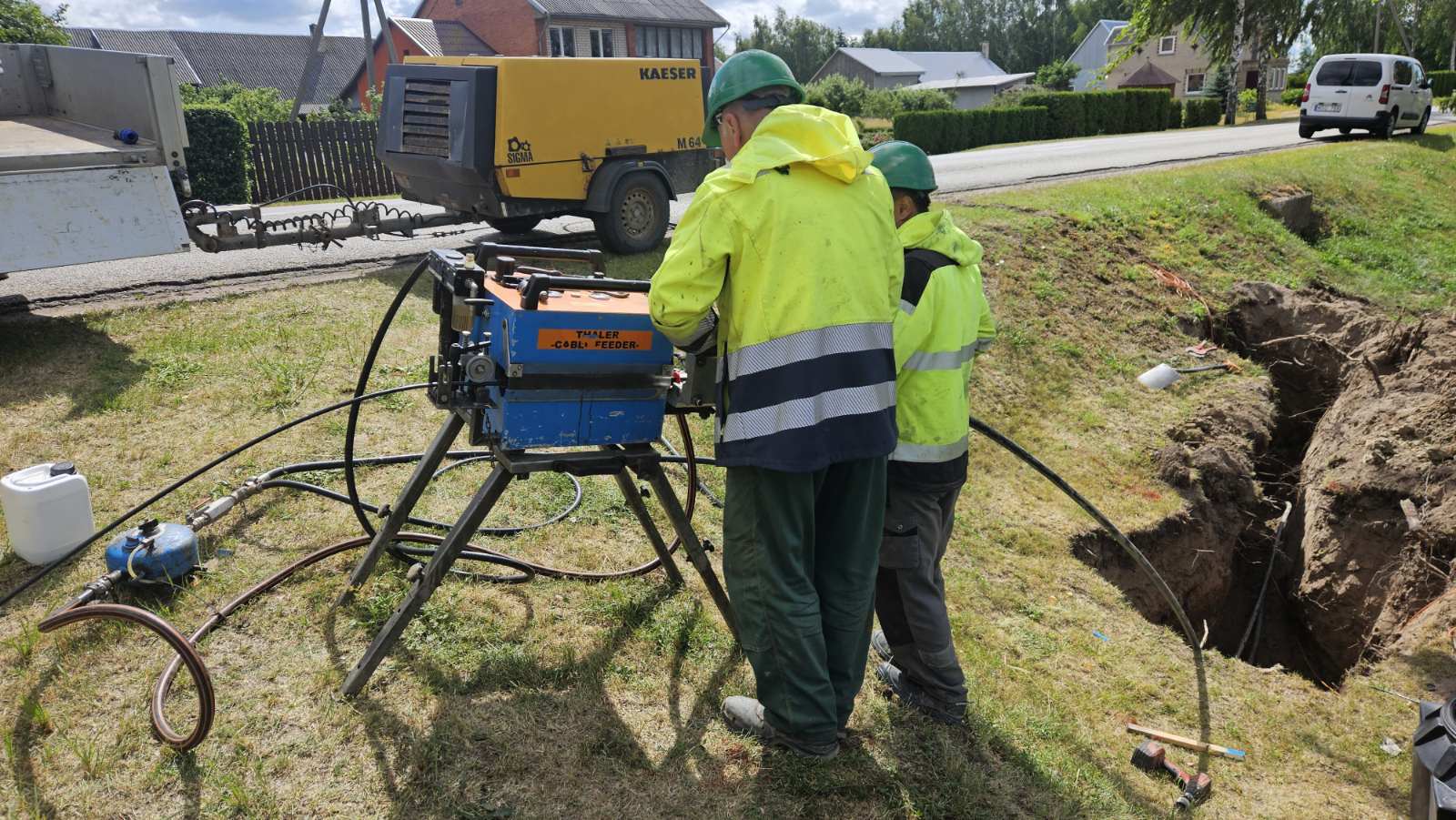
As part of the implementation of the project “Ultra-Fast Connectivity Infrastructure”, aimed at ensuring access to gigabit-speed broadband for entities that promote social and economic development, Lithuania’s regions are increasingly connecting to the digital world.
Across the country, more than 1,500 entities already have the opportunity to connect to the ultra-fast network. The project, implemented by the public institution “Plačiajuostis internetas” (Broadband Internet), seeks to ensure that high-quality and high-speed internet is accessible not only in major cities but also in remote and economically less attractive areas.
Currently, 1,533 entities from various Lithuanian municipalities are able to connect to the infrastructure. Among them are 742 businesses, 613 farms, 66 communities, 21 social institutions, 21 medical institutions, 30 infrastructure facilities, 12 rural tourism homesteads, 6 libraries, 6 educational institutions, 8 public order institutions, 2 religious organizations, as well as cultural centers and an energy facility.
This diversity shows that the project covers not only business and the public sector but also community, social, and cultural life—contributing to comprehensive regional development.
The project is actively implemented in the Alytus, Kaunas, Klaipėda, Marijampolė, Panevėžys, Šiauliai, Tauragė, Telšiai, Utena, and Vilnius counties. In Alytus District Municipality alone, 146 entities can already connect, while Zarasai District has 175, and Šilalė District — 97.
These figures demonstrate the rapid expansion of digital services not only in cities but also in remote rural areas where even basic connectivity has often been lacking.
According to Donatas Bernatonis, Head of the Network Technology and Development Department, the project has both technological and social impact:
“Our goal is not only to lay fiber lines or install equipment necessary for network functionality but also to open up opportunities — from faster operation of medical institutions to greater business competitiveness and community involvement in the digital world,” he says.
It is important to note that once the infrastructure is built, commercial services are later provided by private telecommunications operators. However, the creation of the infrastructure itself is a crucial step that opens the door to technological progress — particularly in areas where internet services were previously of poor quality or unavailable.
The implementation of the “Ultra-Fast Connectivity Infrastructure” project is a concrete and tangible step toward reducing the digital divide between urban and rural areas. This initiative contributes to building a stronger, more inclusive, and more connected Lithuania — where digital opportunities are accessible to everyone, regardless of where they live.
The project is funded by the Recovery and Resilience Facility under the “Next Generation Lithuania” plan.
For more information about the project, visit here.
Last updated: 06-02-2026
Related news:
The public institution ‘Plačiajuostis internetas’ is celebrating its 21st anniversary
Ultra-Fast Internet to reach nearly 15,000 households in Lithuania
Ultra-Fast Connectivity Infrastructure project completed
Public Institution “Plačiajuostis internetas” presents its 2025 Sustainability Report
2025 Activity Overview of Public Institution "Plačiajuostis Internetas"